
Air.
Capture CO₂, run reverse water-gas shift
Atmospheric CO₂ is captured and reacted with hydrogen to form carbon monoxide.
Reverse climate change with recycled carbon
Carbon already in the atmosphere is a resource, not just a liability. By capturing it and cycling it back into fuel, every litre burned is a litre that was pulled from the air first: closing the loop instead of adding to it.
How carbon comes out of the air
- 01
Air is drawn in
Fans move large volumes of ambient air across the capture units. CO₂ makes up only about 0.04 % of it, so capture works on air, not on exhaust.
- 02
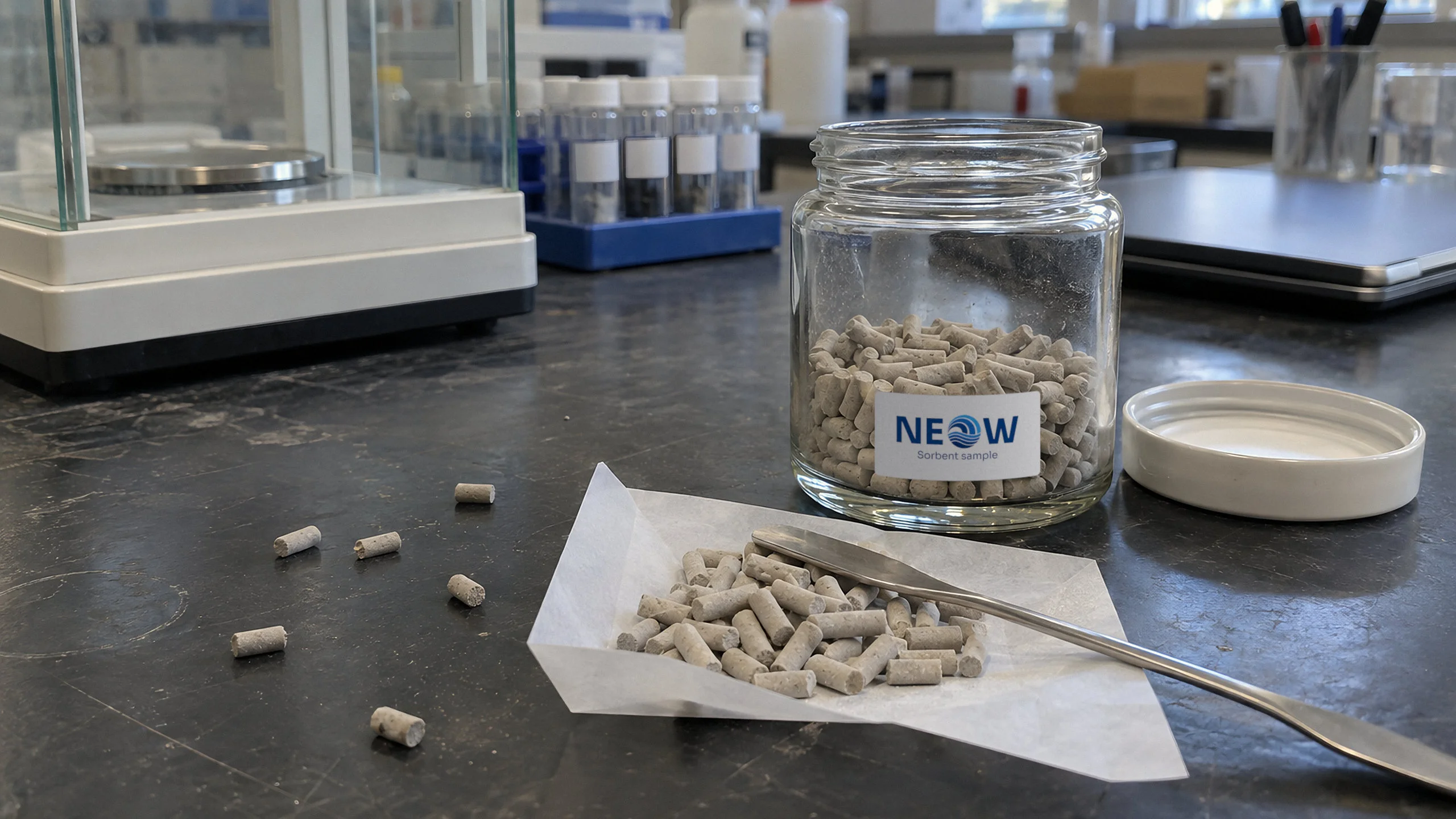
A sorbent binds the CO₂
The CO₂ sticks to a sorbent material while the rest of the air passes through.
- 03
Heat releases pure CO₂
Warming the saturated sorbent releases a concentrated stream of CO₂ and readies the material for the next cycle.
- 04
CO₂ meets hydrogen
At high temperature, the reverse water-gas shift reacts the CO₂ with hydrogen from step one. It yields carbon monoxide and water: together with more hydrogen, the syngas for step three.
The closed carbon loop
- 01
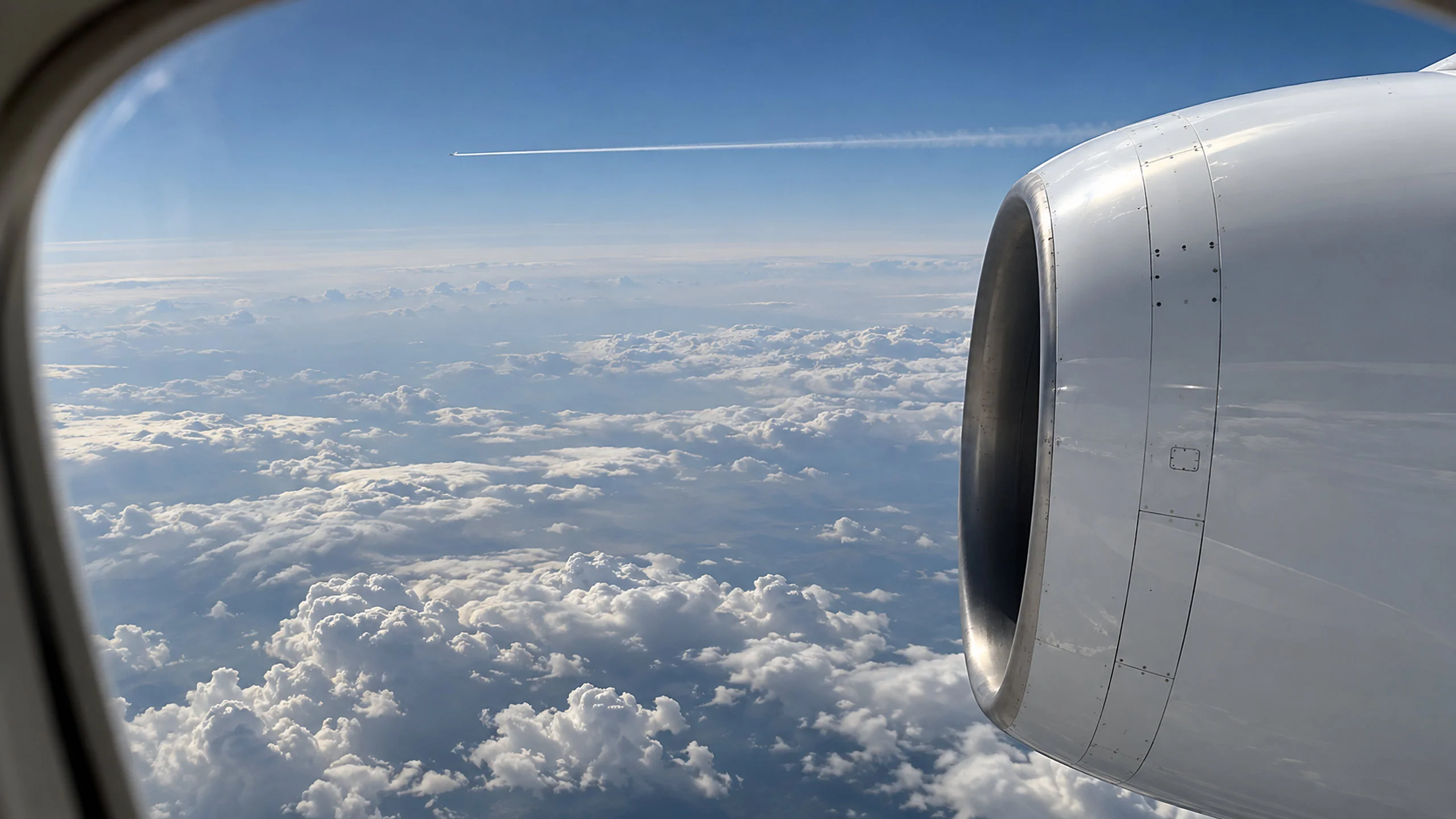
Carbon in the air
CO₂ that is already in the atmosphere, wherever it came from.
- 02
Captured at sea
Trade winds power the capture and the electrolysis, far from any grid.
- 03
Liquid e-fuel
Hydrogen and that same carbon are built into a drop-in hydrocarbon.
- 04
Burned again
Combustion releases exactly what was taken out. Nothing new is added.
A fossil litre adds carbon that was locked away for millions of years. A NEOW litre gives back what it borrowed.