
Wind.
Harvest wind energy, produce hydrogen
Offshore turbines power electrolysis, splitting seawater into hydrogen and oxygen.
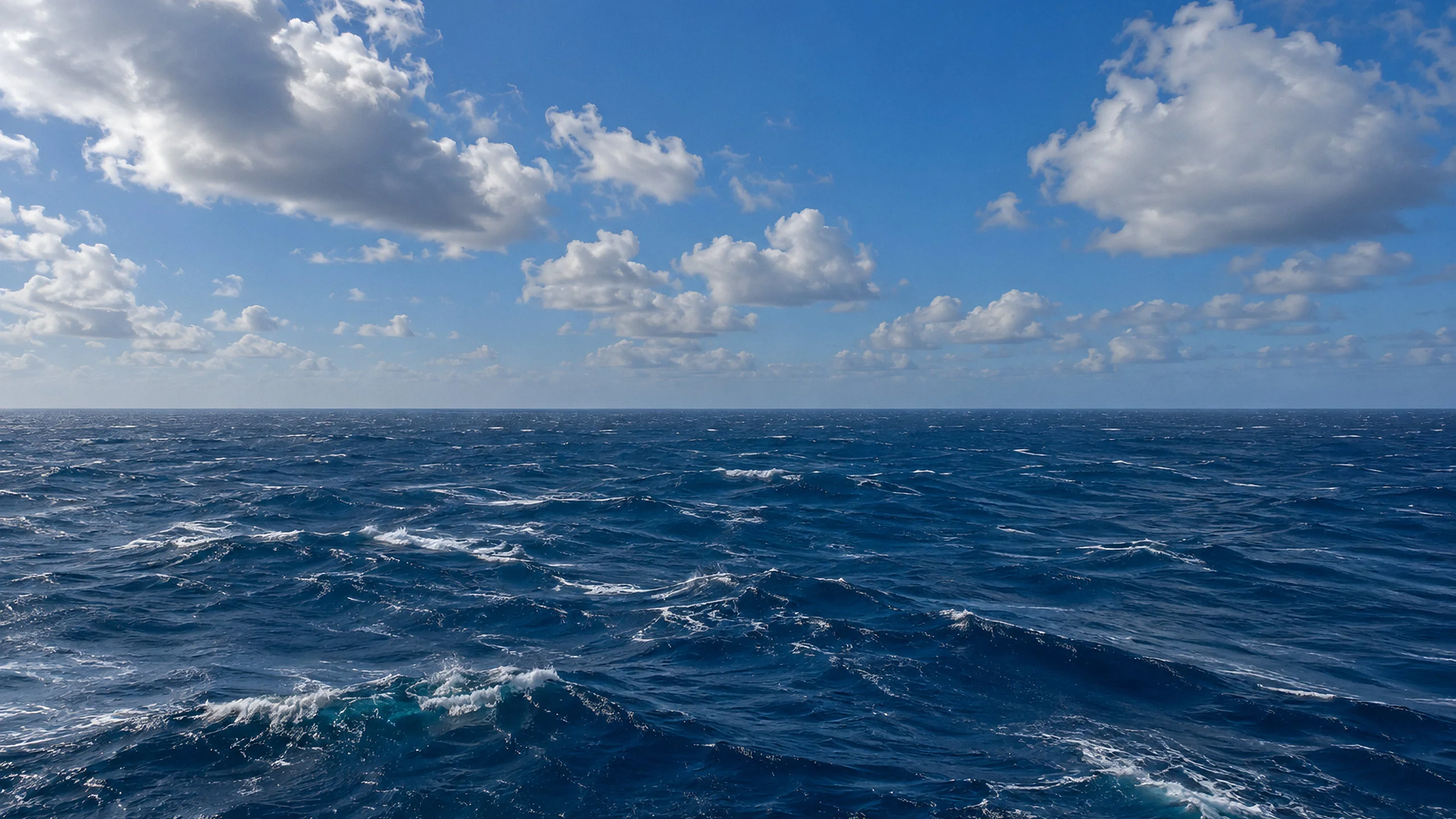
Use the oceans' trade winds to capture CO₂ and turn it into e-fuels
The trade winds are the most reliable renewable resource on the planet: steady, strong and far from any grid. Offshore production converts that energy straight into a fuel that can be stored, shipped and sold anywhere.
How the vessel turns wind into hydrogen
- 01
Kites pull the vessel
Large traction kites fly high in the trade winds, where the wind is stronger and steadier than at sea level, and pull the vessel across the ocean.
- 02
Hydrogenerators make power
Turbines beneath the hull turn the vessel's speed through the water into electricity, with no grid and no fuel on board.
- 03
Seawater is purified
The vessel draws in seawater and desalinates it, because electrolysis needs clean water.
- 04
Electrolysis splits the water
Electricity splits the purified water into hydrogen and oxygen. The hydrogen is the energy carrier for everything that follows; the oxygen goes back into the air.
Why the ocean is the right place to make fuel
- 01
Relentless energy
Trade winds blow steadily year-round, giving far higher capacity factors than land-based wind or solar.
- 02
Closed carbon loop
Every molecule of carbon in the fuel came out of the atmosphere. Burning it adds nothing new.
- 03
Drop-in compatibility
E-fuels work in today's engines, pipelines and ships. No fleet replacement required.
- 04
Cost, not compulsion
Cheap offshore energy is the path to e-fuels that undercut fossil fuels on price alone.