
Fuel.
Add hydrogen, build hydrocarbons
Syngas is upgraded into liquid e-fuels: drop-in replacements for fossil fuels.
Electrolysis, reverse water-gas shift and Fischer-Tropsch synthesis. The complete process is in development.
Turning atmospheric CO₂ into the hydrocarbons the world already runs on
Ocean wind. Captured carbon. Clean e-fuels.
How syngas becomes fuel
- 01
Fischer-Tropsch synthesis
Over a catalyst, carbon monoxide and hydrogen link up into chains of hydrocarbons, the same kind of molecules that make up fossil fuels.
- 02
Refining into e-kerosene
The raw product is upgraded and separated into fractions. The kerosene cut becomes jet fuel; lighter and heavier cuts can become other fuels.
- 03
Blended at the airport
Synthetic kerosene from this route is already approved for blending with fossil jet fuel, so it flows through today's tanks, pipes and aircraft engines.
- 04
Shipped like any liquid
As a liquid, the fuel is stored and transported with the infrastructure that exists today, from the vessel to the airfield.
Aviation can't go electric. It needs our fuel.
Batteries are 40× too heavy for long-haul flight and hydrogen needs entirely new aircraft and airports. For decades to come, aircraft will burn liquid hydrocarbons. The only question is where the carbon comes from.
- of global CO₂ emissions come from aviation, and rising with traffic
- ~3 %
- more emissions per passenger on a private jet than on a commercial flight
- 14×
- e-kerosene share mandated at EU airports by 2050 under ReFuelEU (1.2 % from 2030)
- 35 %
Sources: Transport & Environment; ReFuelEU Aviation Regulation (EU) 2023/2405.
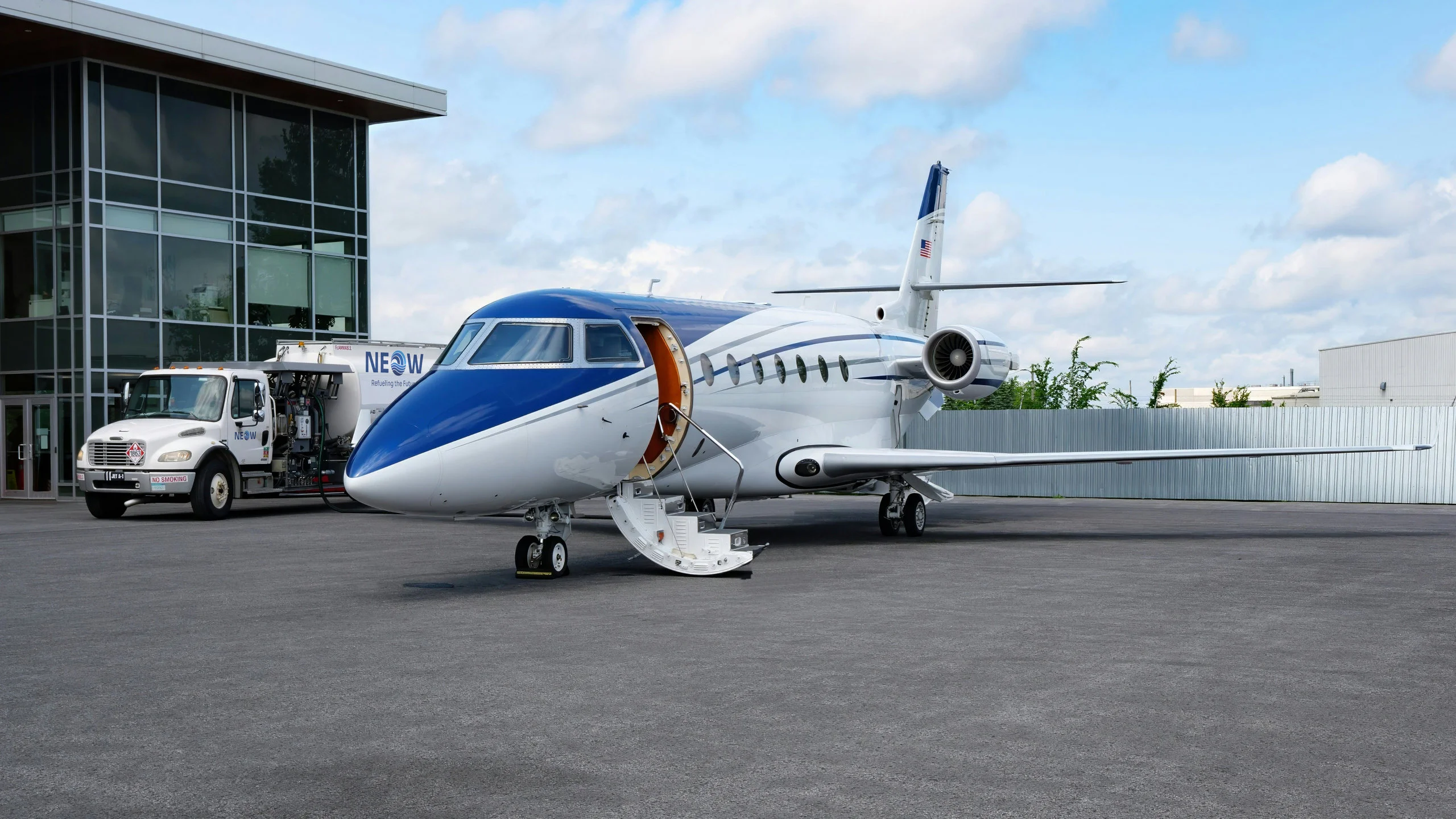
Why private jets are the first customer
- 01
Fuel is a rounding error
On a private flight fuel is a small slice of the total cost. A premium for clean e-kerosene barely moves the price of the trip.
- 02
Maximum scrutiny
Owners and operators face public and regulatory pressure: airport bans, flight tracking, private-jet taxes. Clean fuel is the credible answer.
- 03
No other option
Business jets fly far and fast on small airfields. Electric and hydrogen aircraft won't serve this mission for decades; drop-in fuel does today.
- 04
Small volumes, big margins
A single offshore unit can supply a meaningful share of a region's business-aviation fuel: a market we can serve before scaling to airlines.
Expansion path
- Private jets
- Commercial airlines
- Shipping
- Road
Stop fossil fuels. By price.
The fastest way to end fossil fuels is to make the alternative cheaper.